Pennsylvania
Google helps Pennsylvania businesses move toward their goals
-
$22.5Bof economic activity
In 2025, Google helped provide $22.5 billion of economic activity for tens of thousands of Pennsylvania businesses, nonprofits, publishers, creators, and developers
-
767,000 Pennsylvania businesses
More than 767,000 Pennsylvania businesses used Google’s tools at no cost to receive phone calls, bookings, reviews, requests for directions, or other direct connections to their customers
-
$20M+of Ad Grants to nonprofits
In 2025 alone, Google.org provided more than $20 million worth of donated search ads to Pennsylvania nonprofits through the Google Ad Grants program
-
$132M+in philanthropic and social impact funding
Since 2005, Google and Googlers have given more than $132 million in funding (cash grants, social impact funding, employee donations, and gift match) to organizations and nonprofits in Pennsylvania
-
59,000+ volunteer hours
Since 2009, through Google.org, Google employees volunteered more than 59,000 hours with nonprofits and schools


$22.5Bof economic activity
In 2025, Google helped provide $22.5 billion of economic activity for tens of thousands of Pennsylvania businesses, nonprofits, publishers, creators, and developers
767,000 Pennsylvania businesses
More than 767,000 Pennsylvania businesses used Google’s tools at no cost to receive phone calls, bookings, reviews, requests for directions, or other direct connections to their customers
$20M+of Ad Grants to nonprofits
In 2025 alone, Google.org provided more than $20 million worth of donated search ads to Pennsylvania nonprofits through the Google Ad Grants program
$132M+in philanthropic and social impact funding
Since 2005, Google and Googlers have given more than $132 million in funding (cash grants, social impact funding, employee donations, and gift match) to organizations and nonprofits in Pennsylvania
59,000+ volunteer hours
Since 2009, through Google.org, Google employees volunteered more than 59,000 hours with nonprofits and schools
Featured businesses

Michelle Marie Boutique
When Michelle VanBibber’s kids were young, she’d buy them vacation souvenirs but they never lasted long. “I thought, ‘There's got to be something else out there,’” she recalls. Already the designer and owner of jewelry manufacturer and wholesaler Ciao Bella, she launched her online retail store, Michelle Marie Boutique, in 2017 with one goal: making meaningful, lasting gifts. The shop offers items for every occasion, including custom holiday ornaments and gemstone necklaces. They manufacture and carry licensed military jewelry and gifts, and there’s also a charitable collection that raises money for brain tumor support in honor of her late husband. The boutique has over 2,000 active SKUs and serves 2,000 to 3,000 customers annually; they’re also now in national retailers. “My favorite part of the business is knowing something I handcrafted will play a small role in someone’s most cherished moments,” says Michelle.

“From optimizing our studio layout for efficiency to generating high-quality product videos without live models, Gemini is a massive time saver.”
Michelle uses Google Analytics to track web traffic and conversion rates, and to adjust inventory based on customer views. Gemini Live acts as a conversation partner to brainstorm collection names and discuss market trends for new designs, and Michelle saves time by using Gemini to generate photos and videos, creating backgrounds in minutes using Nano Banana. For one trade show, she was given a narrower booth space than she was used to working in, so she needed ideas for the layout. “I told Gemini which products I was bringing and it came up with a garden path design,” she says. “It saved me hours and we had so many compliments!” She’s since used Gemini to reconfigure her studio into a more efficient space. Michelle attributes 80 percent of her retail growth directly to using Google products. “When you have an online business, you have to be able to evolve,” she says. “Gemini has helped us a lot with new plans.”
Products

Jason Anthony Group

Jason Anthony always wanted to work for himself as an artist and graphic designer, but building up a client base was taking a back seat to his full-time sales and consulting work. That’s until November 11, 2011–11/11/11, Jason points out–when “the whole department got a pink slip.” “I was just waiting for that moment to make the leap,” Jason says. So he went all in and turned his side gig into the full-time Jason Anthony Group. Today, Jason collaborates with other agencies and contractors, but he’s still a one-person shop, providing front-end and web development, graphic design, search engine optimization, and search engine marketing services to around 150 clients per year.

“Gemini lets me recoup time on my calendar by not having to take an hour or two hours to do some of these more repetitive tasks throughout the day.”
Jason has been using Google Workspace since the beginning. “I live on Gmail and Calendar for managing the day-to-day and fielding inquiries from clients,” he says. “We also do a lot of asset sharing, and Drive makes it really easy to collaborate with other contractors and send deliverables to clients.” Recently, Jason has been using Gemini as a sort of virtual assistant to support him with repetitive tasks and refining emails and proposals. “I love the integration of Gemini into the different Workspace features like Gmail, Sheets, and Docs,” he says. For his clients, Jason uses Google Business Profile and Google Ads to ensure they’re showing up at the top of Search results. “The benefit of Ads is that they have direct influence on Search results as opposed to organic, which may take a bit more time to push out,” he explains. “And Google Business Profile is clutch, especially for local service providers.” To track conversions and traffic for clients, he uses Google Analytics, Tag Manager, and Search Console. The Jason Anthony Group currently sees 30-40 percent year-over-year growth. Jason says, “The focus now is to lean into what's been working, to keep niching down, and then continuing to scale.”
D’IYANU
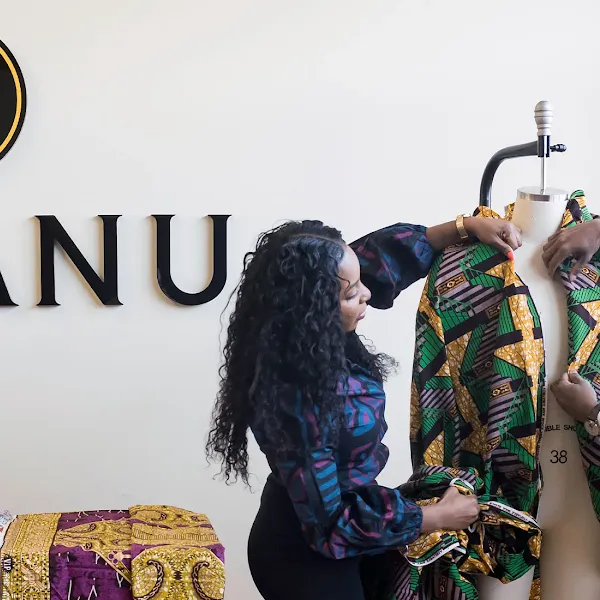
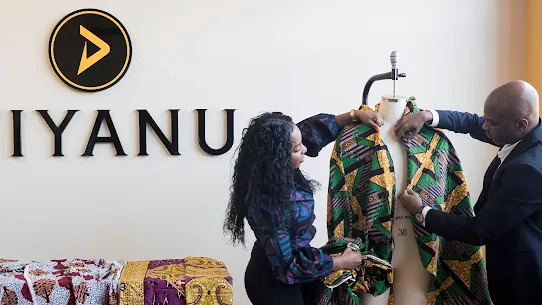
Born in Nigeria, Addie Ajayi launched D’IYANU in 2014 to bring the vibrant prints of her childhood into mainstream fashion. “I realized that there was no ready-to-wear African-inspired brand on the market that was selling to people like me,” Addie says. “I wanted to fill that void–to create modern clothing and accessories for people who want to wear the prints but in a stylish, trendy way.” Teaching herself design as she went, Addie leveraged her background in business and marketing to grow D’IYANU and eventually brought in her brother, Dara Ajayi, to manage customer-facing operations. They began using Google Ads in 2018 and saw major results the following year. “We’re seeing almost 8x return from our Google Ads performance, and it’s been very helpful in keeping us profitable,” Addie says. Google Ads accounts for about 25 to 30 percent of D’IYANU’s revenue.
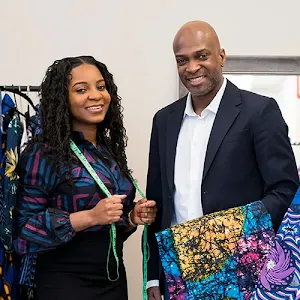
“Google Ads has really taken off for us, especially when other digital platforms weren’t performing as well. The returns we're experiencing–it’s phenomenal.”
With the help of 15 employees, the brother/sister team now ships Addie’s bold designs for men, women, and kids to about 40,000 customers per year all over the world. Meanwhile, the marketing team uses Google Analytics to dig into performance. “Being able to see which platforms are driving sales for our business is crucial. Google Analytics gives us that picture so we understand where to invest our marketing budget," Addie says. As D’IYANU continues to scale, they are establishing warehousing in Canada to reduce shipping times for their northern neighbors, and they foresee growth in Europe next. Addie says that Google Ads will play a key role in reaching target customers as they expand in those markets. “We would really like to serve anyone who is interested in colorful, stylish, interesting new garments,” Dara says. “We believe that over the next five to ten years, we can really scale the business to become a force to be reckoned with in the fashion industry.”
Products

Switchboard Live

With 15+ years of industry experience, Rudy J. Ellis knew the hassle of sharing livestreams across channels. He launched Switchboard Live in 2016 to allow users to automatically share streams across YouTube Live, Twitter, Twitch, and other platforms—replacing a time-consuming, insecure, manual process. Features like “viral StreamShare” allow customers to easily reach a larger viewing audience, which is key in live streaming video. “Initially, I created the product for gamers and houses of worship,” Rudy says, “but I quickly realized there was a bigger opportunity.” The SaaS platform now serves enterprises, small businesses, and content creators across industries—multistreaming everything from church services and webinars to professional sporting events and product releases.

“Guidance from Google employees in areas of marketing and sales empowered us to look beyond our initial goals and reach even higher to meet our customer needs.”
Starting with Google Cloud for small workloads, Switchboard Live initially used Google App Engine to spin up additional resources as traffic increased. But as the world moved online at the start of the pandemic and the platform grew, they turned to Google Kubernetes Engine (GKE). “We wanted a fully managed Kubernetes platform that was easy to manage and had an effortless developer experience, and GKE gave us that,” says Rudy. Cloud Build, meanwhile, provides Switchboard Live with a unique developer experience when it comes to CI/CD–a method to frequently deliver apps through automating the stages of development. They also use Cloud Ops for actionable insights, given its deep integrations with GKE. In 2019, Rudy was awarded funding from the Google for Startups Black Founders Fund, helping Switchboard Live to increase development hours, execute on paid marketing initiatives, and, ultimately, increase signups by 400 percent. “Receiving Google Ads and Google Cloud credits has been helpful, “ Rudy says, “but having someone there to talk us through the best way to use our credits was the real benefit.”
Products
Duolingo

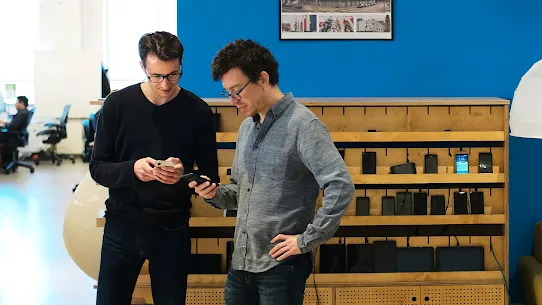
When Luis von Ahn and Severin Hacker created the Duolingo app in 2012, their mission was to make language learning free, fun, and convenient. They knew that language proficiency—besides being critical for business, education, and travel—was key to economic success for immigrants, who often can’t afford traditional courses. Based in Pittsburgh, Duolingo soon became the most-downloaded education app in the world, hitting 100 million downloads in the Google Play Store by 2017 and 300 million users by 2019. They now offer courses in 38 languages and along with group practice events, they’ve also added an English proficiency test and a paid premium tier. In 2019, their first DuoCon language convention—live streamed on YouTube—attracted over 100,000 unique views.
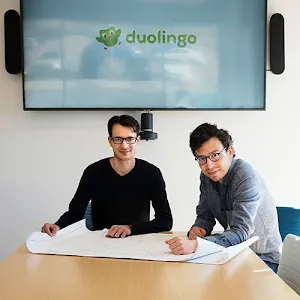
“If we didn't have the Play Store and an Android app, we wouldn’t be able to reach so many people and offer the free education we’re looking to provide.”
COVID-19 lockdowns led to a spike in app usage; downloads rose across the globe as the pandemic spread. Monthly users jumped from 30 to 40 million, with "school" and "brain training" cited as the top motivations. Sam Dalsimer, head of PR, says the fastest-growing product was their English proficiency test, used by international students applying to U.S. colleges. “Most physical testing centers had to close,” he points out. “Our exam is online and you can take it anytime.” That accessibility drove a 1,500-percent rise in test takers. This growth spurred a move to Google Drive as their new creative asset repository, improving coordination both internally and with outside agencies. To assist families with young children affected by school closures, they moved up the launch of the Duolingo ABC app to help kids learn to read and write; it also exemplifies Duolingo’s mission. “Much as Luis created Duolingo to improve people’s lives and economic status, he sees similar potential to make a positive impact by making sure kids all around the world can learn to read for free,” Sam explains. “The broader goal behind ABC is to make a dent in global literacy rates.” And that's a language we can all understand.
Products