-
$4.2B+ of economic activity
In 2025, Google helped provide more than $4.2 billion of economic activity for thousands of Nebraska businesses, nonprofits, publishers, creators, and developers
-
126,000Nebraska businesses
More than 126,000 Nebraska businesses used Google’s tools at no cost to receive phone calls, bookings, reviews, requests for directions, or other direct connections to their customers
-
$15B investment in Nebraska
Since the Papillion, Nebraska data center was built in 2019, the Omaha, Nebraska data center was built in 2022, and the development of a new data center in Lincoln, Nebraska was announced in 2023, Google has invested more than $15 billion in the state1
Investment methodology now reflects total data center investment (construction, server and networking infrastructure). Learn more. -
$4M+ in philanthropic and social impact funding
Since 2006, Google and Googlers have given more than $4 million in funding (cash grants, social impact funding, employee donations, and gift match) to organizations and nonprofits in Nebraska
-
6,000+ volunteer hours
Since 2014, through Google.org, Google employees volunteered more than 6,000 hours with nonprofits and schools
-
$2M+ of Ad Grants to nonprofits
In 2025 alone, Google.org provided more than $2 million worth of donated search ads to Nebraska nonprofits through the Google Ad Grants program


$4.2B+ of economic activity
In 2025, Google helped provide more than $4.2 billion of economic activity for thousands of Nebraska businesses, nonprofits, publishers, creators, and developers
126,000 Nebraska businesses
More than 126,000 Nebraska businesses used Google’s tools at no cost to receive phone calls, bookings, reviews, requests for directions, or other direct connections to their customers
$15B investment in Nebraska
Since the Papillion, Nebraska data center was built in 2019, the Omaha, Nebraska data center was built in 2022, and the development of a new data center in Lincoln, Nebraska was announced in 2023, Google has invested more than $15 billion in the state1
Investment methodology now reflects total data center investment (construction, server and networking infrastructure). Learn more.
$4M+ in philanthropic and social impact funding
Since 2006, Google and Googlers have given more than $4 million in funding (cash grants, social impact funding, employee donations, and gift match) to organizations and nonprofits in Nebraska
6,000+ volunteer hours
Since 2014, through Google.org, Google employees volunteered more than 6,000 hours with nonprofits and schools
$2M+ of Ad Grants to nonprofits
In 2025 alone, Google.org provided more than $2 million worth of donated search ads to Nebraska nonprofits through the Google Ad Grants program
Featured businesses
Sun Valley Lanes & Games
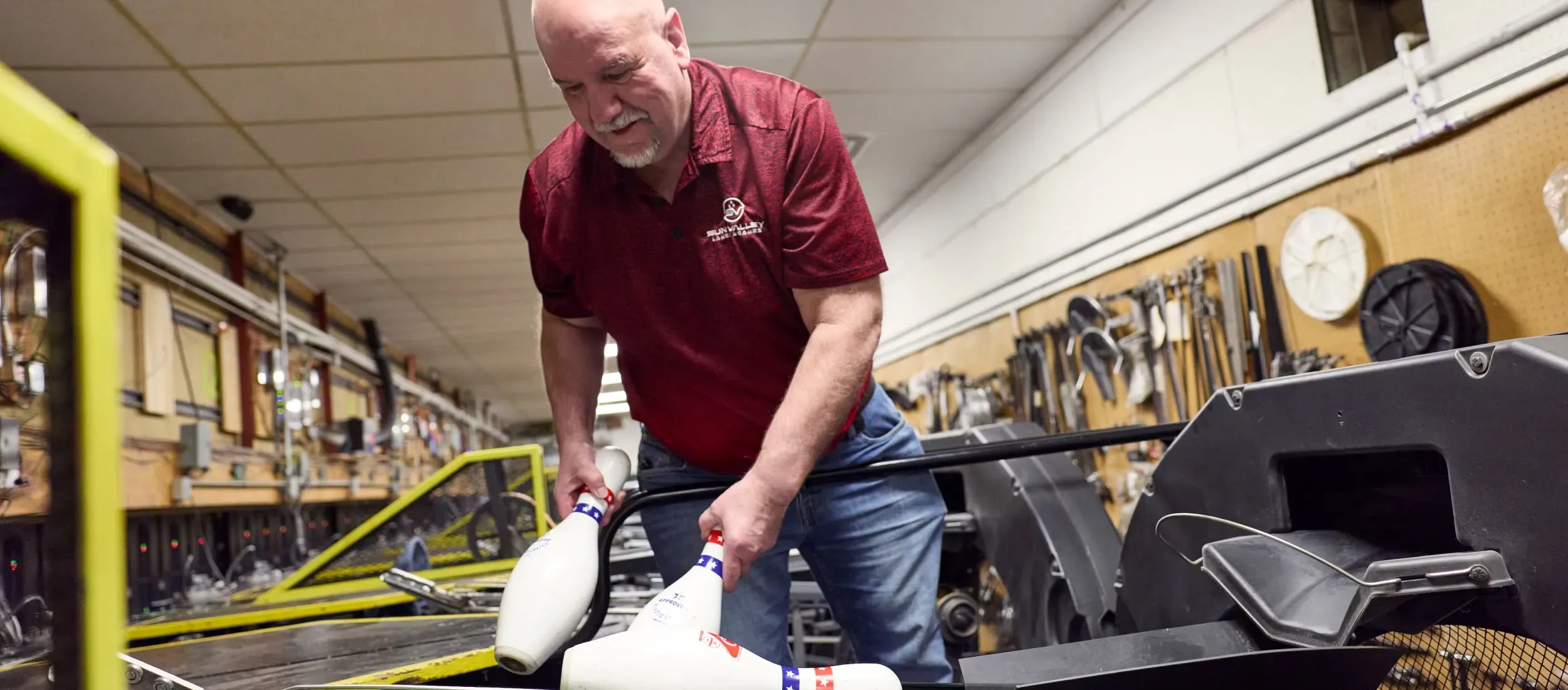
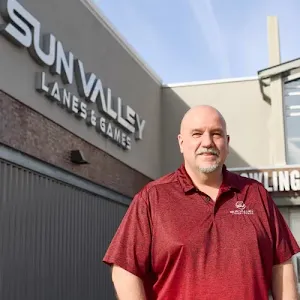
John Losito first joined Sun Valley Lanes & Games as a pinspotter mechanic in 1988 while bowling for the University of Nebraska. After college, he began a pro bowling career that took him on tour and then to the Philippines as national coach, but he returned to Nebraska in the ’90s and became sole owner of Sun Valley in 2011. John has since transformed the alley, encouraging more open play in addition to league bowling, and adding laser tag, mini golf, and outdoor games like sand volleyball and cornhole. “We’re in the business of fun, and we try to make memorable experiences for all of our guests,” John says. After an expansion in 2022, Google Search helped Sun Valley fill the space. “Google is important for finding new customers. Probably 80–90% search ‘fun things to do in Lincoln’ and we come up,” John says. Revenue increased by around 130 percent, and John estimates that he now serves 40,000 unique customers per year.
“It’s absolutely amazing that [Gemini] exists.”
Sun Valley used Google Analytics to help them redesign their online reservation system. “Around 70 or 80 percent of people would drop off because our system was clunky,” John explains. “Analytics was very important in determining how to revamp it, and now it’s more like a 70-to 80-percent closure rate.” They use Gemini to generate marketing ideas, edit photos, draft emails, and craft responses to reviews. Sun Valley’s general manager, Brian Kleinknecht, even uses Gemini to generate code to quickly build apps. One such app calculates how to split staff tips, turning a 15–20 minute daily task into a three minute task. Another, which Brian got up and running in 20 minutes, manages laser tag reservations. “I don’t think everybody understands the depth of the potential of Gemini,” John says. “When you look at Brian, with no knowledge of coding at all and then creating this app in less than half an hour to make our lives easier, it’s absolutely amazing that this exists.”
Products
Elevator
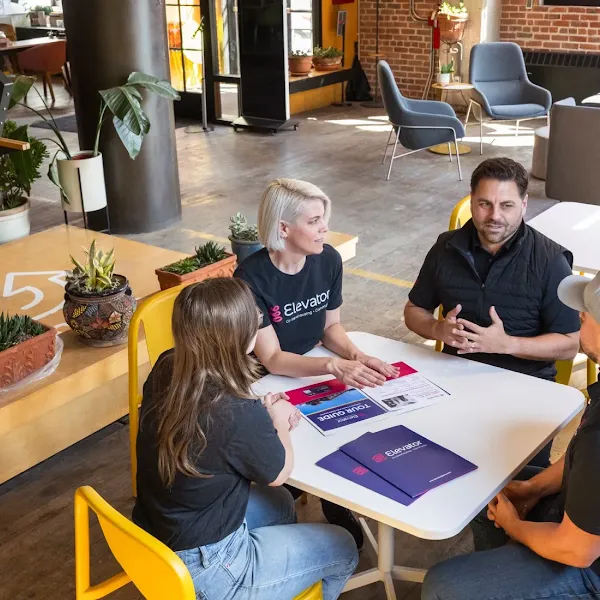
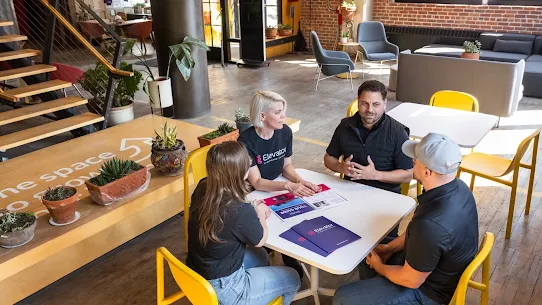
Before they founded Elevator, Emiliano and Shannon Lerda ran a home-based, online pet supply company–which took over their entire house. Commercial warehouses, they found, were too big, gritty, and costly to meet their needs. Then Shannon had an idea for a “co-warehousing” space where businesses could share amenities. “It was a lightbulb moment,” Emiliano says. “We knew we could do this together.” The couple founded Elevator in 2021 in a historic, four-story brick building in Omaha, with 56,000 square feet of space. It’s now home to 100+ companies–from craftspeople to contractors. Along with renting offices, studios, workshops, and warehouse spaces, Elevator provides shipping and receiving services, plus help with accounting, marketing, and other topics, including how to use Google Ads to elevate your business. Even before opening Elevator’s doors, they used Google Ads to attract people searching for office or warehouse space.
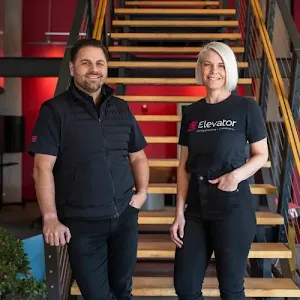
“We now have more than 100 potential members on a waitlist for our new location. We can credit a lot of that to Google Ads.”
“Google Ads has been one of our most powerful marketing and recruiting tools,” Emiliano says, noting that Ads accounted for 15 percent of their 2024 members. They use AI-powered Performance Max campaigns to reach customers, while Google Analytics helps them learn more about their audience. Their Business Profile offers hours, directions, photos, and reviews, and their YouTube channel gives potential members, partners, and investors a tour of the facility, along with Elevator community success stories. Google Workspace helps them communicate, collaborate, and stay organized. They plan to open four more Midwest locations in 2025, and Google Ads is helping them reach new customers. “We love how Elevator helps small businesses grow, collaborate, and thrive,” Emiliano says. “It’s more than just providing space; it’s about fostering a supporting environment where entrepreneurs celebrate their wins.”
Maxwell
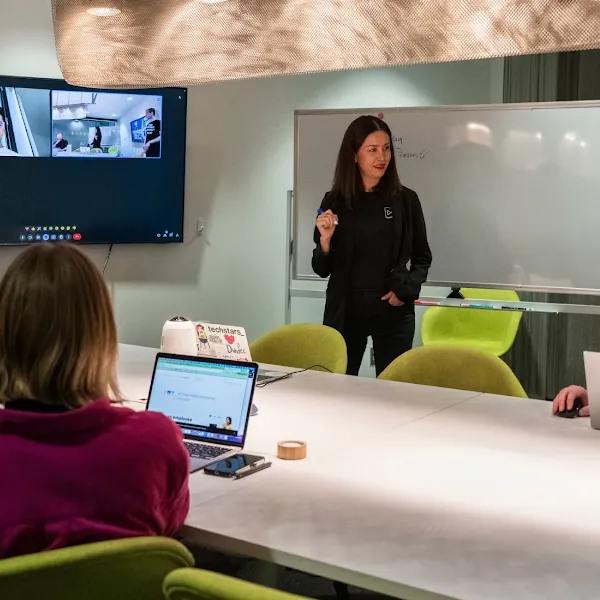
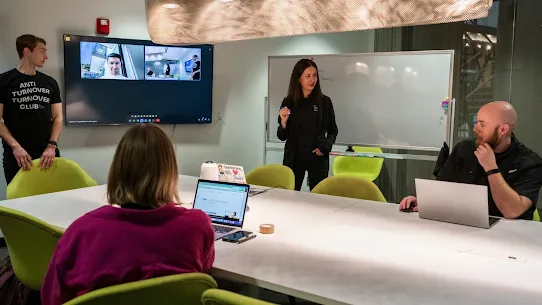
For Adriana Cisneros Basulto, her brand of instant recognition hits different: “It’s not because you did your job–that’s your paycheck. This shows that your employer cares about you.” As an HR professional, Adriana knew that workers who feel valued do better and stay with their employer longer. But she also knew companies find it hard to tailor rewards to each employee’s needs. So in 2020, she and Stephen Enke co-founded Maxwell. It’s a one-stop app that leverages a lifestyle spending account (LSA) to provide instant recognition and lifestyle benefits to staff. The result is higher retention and better work-life balance. Employers can recognize their staff with a monthly stipend and/or ad-hoc rewards that accrue in their LSA. Employees can use their rewards in-app to send recognition to their peers, on the Maxwell marketplace, or off-app using their Maxwell Visa card on what matters to them. Maxwell caters to the healthcare industry, where retention is a critical issue.
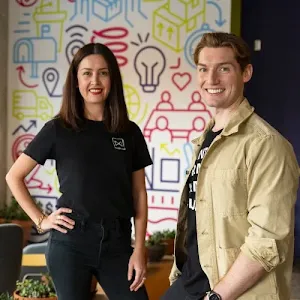
“Gemini has been very helpful as a starting point for our blog. It can give me a draft, and then I can customize it from there.”
In 2023, Maxwell was a recipient of the Google for Startups Founders Funds, which includes funding and mentoring. “Google’s belief in us has opened doors and helped us get the word out,” Adriana says. As Maxwell grows, they’re taking advantage of AI-powered tools. “AI helps us run more efficiently,” Adriana notes. “It summarizes information, cleans up our communications, and reduces administrative work.” She uses Gemini to gather info and draft outlines for blog posts, freeing her up to write them, and Maxwell is exploring how to use AI to better personalize the employee experience for their customers. They doubled their user base in a year, and Adriana is focused on new ways to help clients retain staff and provide “joyful moments” to their users. “Hearing how employees use their LSA is incredibly heartwarming,” Adriana says. “It’s so fulfilling to know that we’re playing a part in bringing them joy.”
Products
Caspian Creates
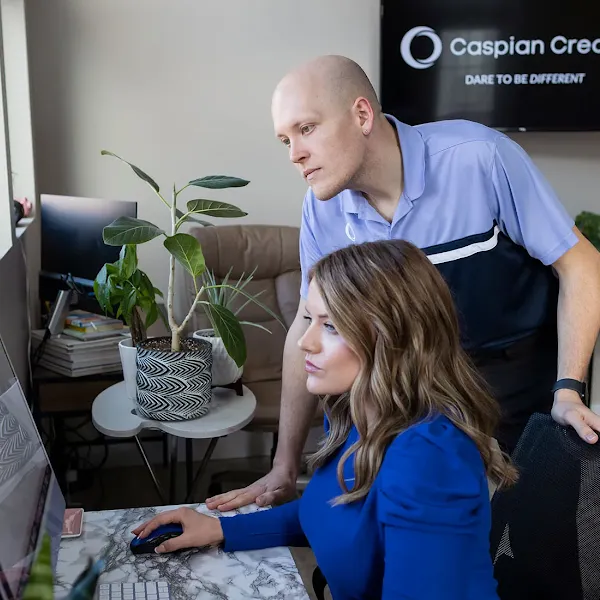
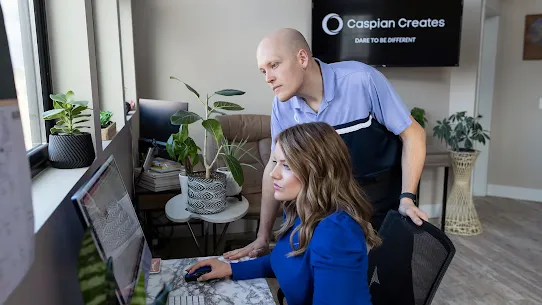
Nebraska photographers Karsen Felzien and Quinten Saathoff learned about the power of online marketing early. Their investment in SEO on their website paid off when they were found and hired by National Geographic to take photos for Loyal, a book about service dogs. Soon they began sharing tips with other local businesses that wanted to raise their visibility. Looking for a way to further increase their impact, Karsen and Quinten launched Caspian Creates in 2020, a digital marketing, advertising, and content studio. “For us, it’s all about helping other people realize their creative visions,” says Karsen, the company’s CMO. Using Google tools, Caspian Creates has helped local businesses move online, stand out, connect with new customers, and grow–especially valuable for those brick-and-mortar stores whose trade was impacted by COVID-19.

“We’ve realized the impact that Google’s tools can have for helping businesses in rural areas be able to stand out online and be easily found.”
Today, Caspian Creates uses Google Analytics to show clients how users interact with websites and ads, so they can make data-driven decisions. “We show clients exactly which demographics they should focus on,” says Quinten, the company’s CEO. Google Workspace tools streamline operations: the company organizes and shares client files via Google Drive. Workflows set up with Google Forms and Google Sheets have reduced client onboarding time from two weeks to 15 minutes. A self-described “automation nerd,” Quinten appreciates Google’s integration with other apps. “It allows us to focus on being creative and not get stuck in the weeds doing paperwork,” he says. Caspian Creates has served more than 60 clients in eastern and central Nebraska. Their revenue grew 50 percent in 2022; their goal for the future is to keep making technology more accessible to rural businesses. “Never underestimate the power of digital tools,” Karsen says. “If we hadn’t taken advantage of Google tools, we wouldn’t have reached where we are today as quickly as we did.”
eCreamery
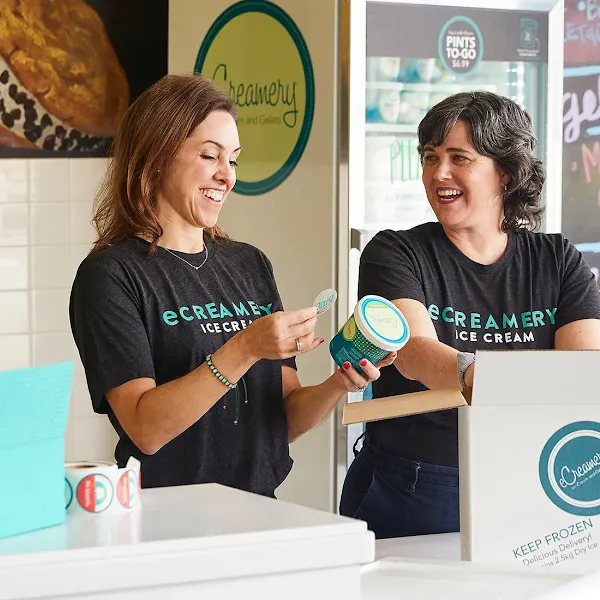
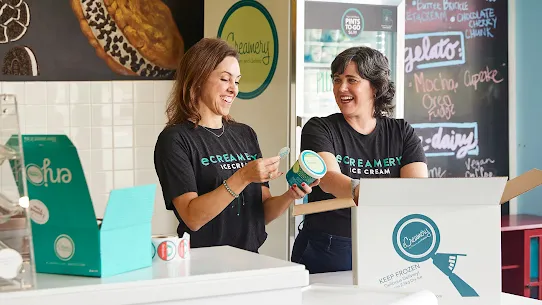
Before dipping into the ice cream trade, Abby Jordan and Becky App worked in fine jewelry and giftware, crafting gifts for all occasions. The pair set out to start their own business, looking for an unfulfilled niche in the gift industry. Flowers and candy were easy to find online and get delivered to someone’s door. “But no one was shipping ice cream,” Abby says. After figuring out the logistics of reusable coolers and dry ice, the two launched eCreamery Gourmet Ice Cream and Gelato in 2007 as both a retail website and store in Omaha. With eCreamery, customers could customize pints with personal messages and company logos. They used Google tools to market their business from the start. “Google Analytics helped us determine referral traffic and optimize our landing pages for organic traffic,” Abby says. They could even see which flavors people were searching for, like butter brickle (popular in the Midwest), and green tea (added as a result of that search insight).

“We use Google Analytics to optimize our landing pages, see where people are coming from, and what search words are working well.”
A Shark Tank appearance in 2012 put eCreamery on the national map, and in 2019, they merged with Carson’s Cookie Fix–opening a second eCreamery shop in Omaha. When both stores temporarily shut down during the COVID-19 pandemic, the team rallied around the e-commerce side of the business. In 2020, they shipped to all 50 states and doubled their year-over-year (YoY) online revenue. “Google Ads made sure we appeared in the right places, where people were looking for a heartfelt, delicious, personal gift,” Abby says. Their Google Business Profile gives visitors the scoop on store locations, hours, and flavors, as well as reviews. With the increase in sales, Abby and Becky are able to give back through their Scoops of Support initiative, supporting arts, sports, and youth services nonprofits. “We love our family of customers,” Abby says. “Google helps us let people know ice cream gifts exist.”
Greater Omaha Area and Lincoln
1To provide a more complete picture of Google’s economic investment, the 2025 U.S. Economic Impact Report has updated its historical investment reporting methodology which previously focused primarily on physical data center construction. However, physical builds represent only the first component of our long-term commitment to our investments which also include applicable server and networking infrastructure capital expenditure. The current year methodology now includes our historical investment in data center construction, server and networking infrastructure.