-
$2.7B of economic activity
In 2025, Google helped provide $2.7 billion of economic activity for thousands of Iowa businesses, nonprofits, publishers, creators, and developers
-
202,000 Iowa businesses
More than 202,000 Iowa businesses used Google’s tools at no cost to receive phone calls, bookings, reviews, requests for directions, or other direct connections to their customers
-
$20B investment in Iowa
Since the Council Bluffs, Iowa data center was built in 2007, Google has invested more than $20 billion in the state1
Investment methodology now reflects total data center investment (construction, server and networking infrastructure). Learn more. -
$5M+ in philanthropic and social impact funding
Since 2004, Google and Googlers have given more than $5 million in funding (cash grants, social impact funding, employee donations, and gift match) to organizations and nonprofits in Iowa
-
6000+ volunteer hours
Since 2013, through Google.org, Google employees volunteered more than 6,000 hours with nonprofits and schools
-
$3M+ of Ad Grants to nonprofits
In 2025 alone, Google.org provided more than $3 million worth of donated search ads to Iowa nonprofits through the Google Ad Grants program


$2.7B of economic activity
In 2025, Google helped provide $2.7 billion of economic activity for thousands of Iowa businesses, nonprofits, publishers, creators, and developers
202,000 Iowa businesses
More than 202,000 Iowa businesses used Google’s tools at no cost to receive phone calls, bookings, reviews, requests for directions, or other direct connections to their customers
$20B investment in Iowa
Since the Council Bluffs, Iowa data center was built in 2007, Google has invested more than $20 billion in the state1
Investment methodology now reflects total data center investment (construction, server and networking infrastructure). Learn more.
$5M+ in philanthropic and social impact funding
Since 2004, Google and Googlers have given more than $5 million in funding (cash grants, social impact funding, employee donations, and gift match) to organizations and nonprofits in Iowa
6000+ volunteer hours
Since 2013, through Google.org, Google employees volunteered more than 6,000 hours with nonprofits and schools
$3M+ of Ad Grants to nonprofits
In 2025 alone, Google.org provided more than $3 million worth of donated search ads to Iowa nonprofits through the Google Ad Grants program
Featured businesses
Stack Wellness Cafe
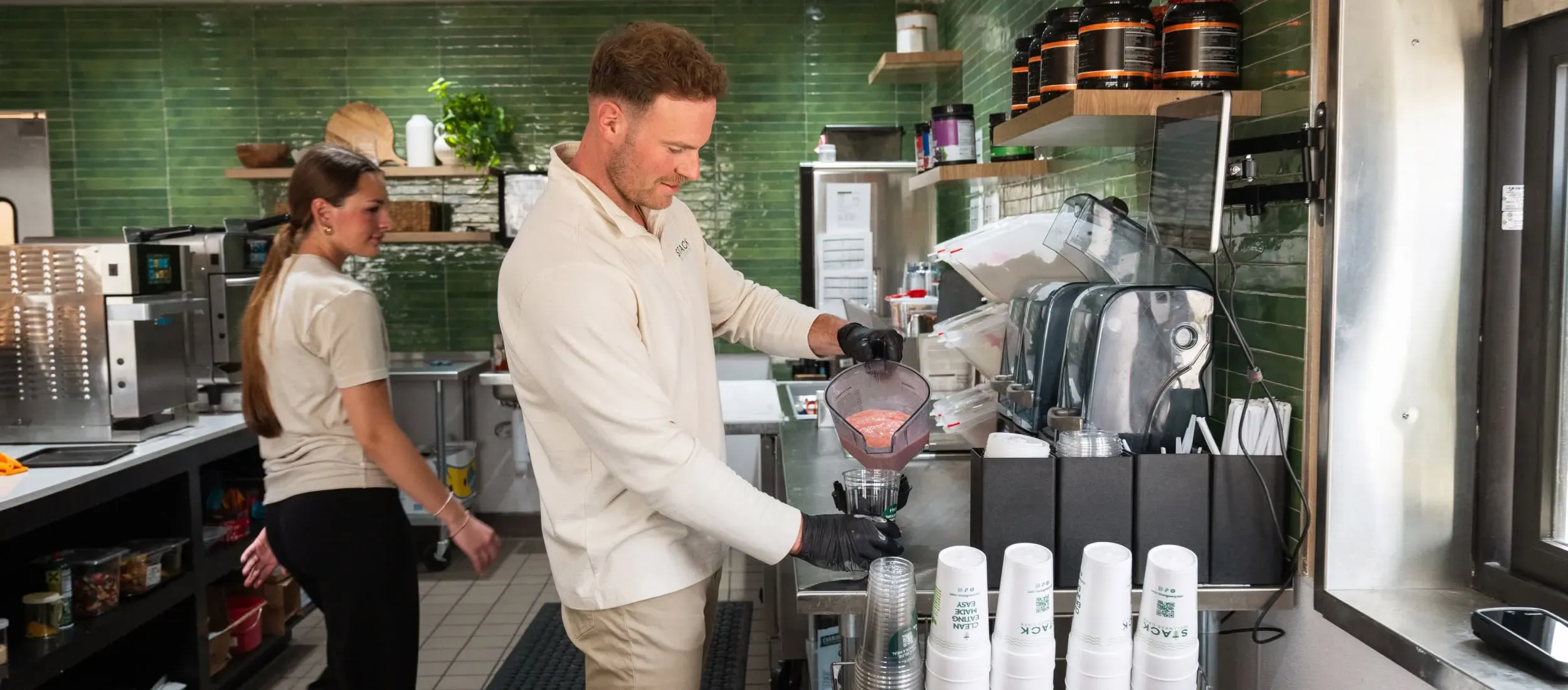
Stack Wellness Cafe’s mission is simple: to empower customers to stack one healthy choice on top of another to create lasting change. After a health transformation of his own, Josh Polansky founded the fast-casual chain in 2024 to make nutrition more affordable and convenient. Stack offers colorful, tasty smoothies, bowls, wraps, and more, displaying macros (carbs, fat, protein) and calories for easy tracking. There are now five locations in Iowa with a sixth on the way; a Smoothie Van builds brand awareness and the company also offers catering. They’ve set a goal of 20-percent annual growth and served 130,000+ guests in their first full year. “We provide high-quality ingredients and transparency so you can make decisions that are right for you,” Josh says. “I’m very proud of the value we’re bringing to people’s lives.”
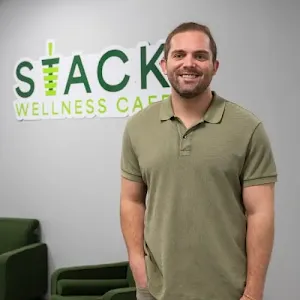
“With Gemini, I can take my creative ideas and iterate faster to finish a project. It increases my productivity 10x.”
CIO Carson Goodale encourages reviews by putting QR codes on each receipt that link to Stack’s Google Business Profile. They have 975 five-star reviews and the profile generated over 31,000 website visits in one quarter. Another 10–20 percent of their web traffic comes via Google Ads, including Performance Max. Gemini helps Carson create images for menus and marketing. “With Gemini, I can take my creative ideas and iterate faster to finish a project,” he says. “It increases my productivity 10x.” Carson combines Gemini and Google Analytics MCP to query data using natural language. “I can ask which ad campaigns are performing best and why,” he explains. “We can spend more time making strategic decisions and less time mining data.” Stack gives back as they grow: Through GiftAMeal, they donate a meal to a food bank for each customer selfie, giving 700 meals in one month alone. Josh wants Stack to be part of “health journeys of any kind,” and he leads by example. “I’ve eaten here every day for 18 months,” he says. “I love it.”
Hansen’s Dairy
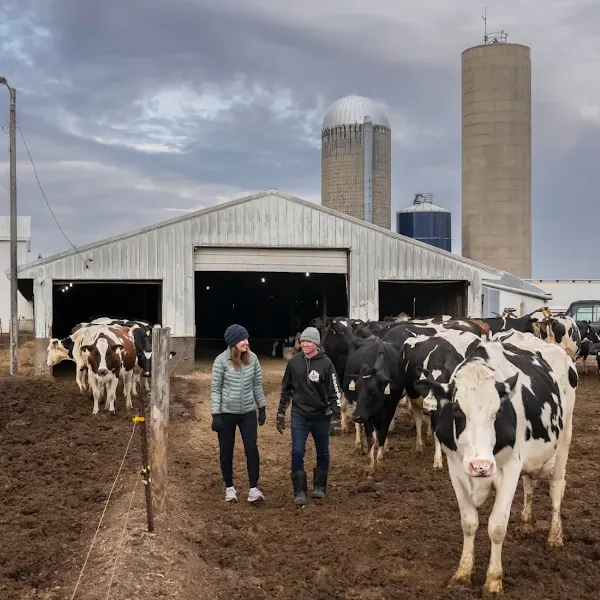
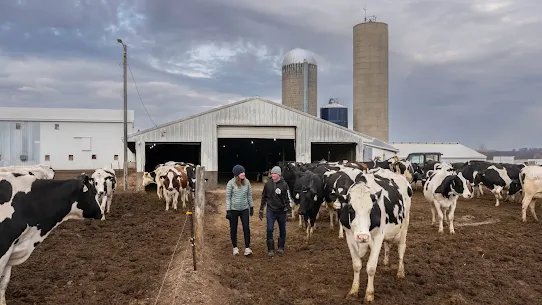
When you’ve had a farm for seven generations, you know a thing or two about changing with the times. That’s how the Hansen family’s Iowa farm grew from their early roots in 1864 to dairy cows in 1950, and on to agritourism and a creamery in 2004. “The family wanted to grow the farm so they decided to start processing on their own and selling direct-to-consumers. That way, we could set our own prices and capture more of our hard work,” says Jordan Hansen, who helps her husband, Blake, and his brothers Brent, Brad, and Blair, run Hansen’s Dairy. Today their growing list of milk products and ice creams is delivered directly to stores, restaurants, retirement homes, and more. The family has opened two retail stores and a gas station, produces Wagyu-Holstein beef, and offers daily tours where guests can milk cows, bottle-feed calves, churn butter, and meet other animal friends.

“People like knowing where their food comes from, knowing that they can see the story with their own eyes on YouTube, and that contributes to the sales of our products.”
Jordan uses Google Workspace tools like Docs and Sheets to share info and track sales, customers, and costs, so they can stay on top of market fluctuations and adjust operations as needed. “I just love the fact that I can access it from anywhere and that information is always at my fingertips whenever somebody asks,” she adds. The marketing team has started using AI tools like Gemini to craft marketing materials and social media posts. “It just provides new ideas, rather than the same ones in your own head,” Jordan says. She also uses Gemini if she needs images–say, a calf wearing a Santa hat for a Christmas event notice. They post regular behind-the-scenes videos of the farm operations on their YouTube channel, which has more than 10.8 million views. “We can show how cheese is made or other parts of the business,” Jordan says. “Having that on YouTube is another way to showcase our business and give people facts about how things are done. It gives them an insight into the story behind our products.”
Products

Cheerie Lane Popcorn
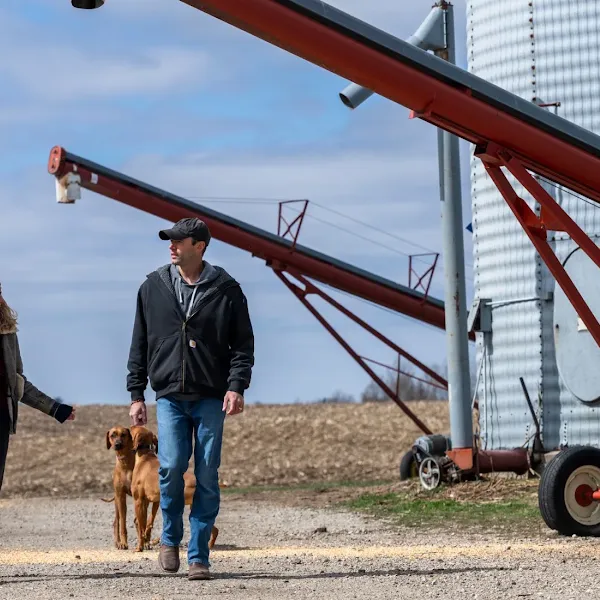
Cheerie Lane Popcorn was born on a fifth-generation family farm, where popcorn was always at the center of the table. “Popcorn is connected to special moments for a lot of families,” says co-founder Kate Greer. “It’s fun–the anticipation of it popping, the smell that lures people to the kitchen and brings them together.” So when Kate joined her cousin Brad Schulte to start a business and honor their heritage, popcorn was the obvious choice. With Kate’s experience in tech and Brad’s in agriculture, they planted their first heirloom kernels seven years ago, and landed on Cheerie Lane’s proprietary popcorn pods in 2021. “We temper healthy cacao butter to get shelf-stable pods,” Kate explains, “and we can deliver a bunch of different flavors to pop on the stove.” Today Cheerie Lane ships their pods across the country.

“Google Workspace is such a connecting force, particularly in the way that it allows us to efficiently collaborate and communicate.”
Kate and her team use Google Meet and other Workspace tools to collaborate remotely, and Drive to stay organized. “It’s like having this traveling file cabinet,” she says. ”It’s the easiest way to access our ideas.” They also use Google Ads and AI-powered Performance Max campaigns, which generated over 100,000 impressions in a recent month and accounted for about 10 percent of sales last quarter. Google Analytics helps the team understand their customers’ journeys, and Google Tag Manager helps them optimize conversions. “To run an efficient business, we have to know a lot about demographics. Tag Manager is tracking which buttons, pages, and actions users are taking,” Kate says. “It’s been wildly useful.” Cheerie Lane Popcorn now offers subscriptions and continues to test new flavors, like the cheese-and-pepper taste of cacio e pepe. “We always think about sitting at the kitchen table with your favorite people, having deep conversations, and hopefully that's when our popcorn is there,” Kate says. “We feel honored to be a part of people's lives in that way.”
Products
Rada Cutlery
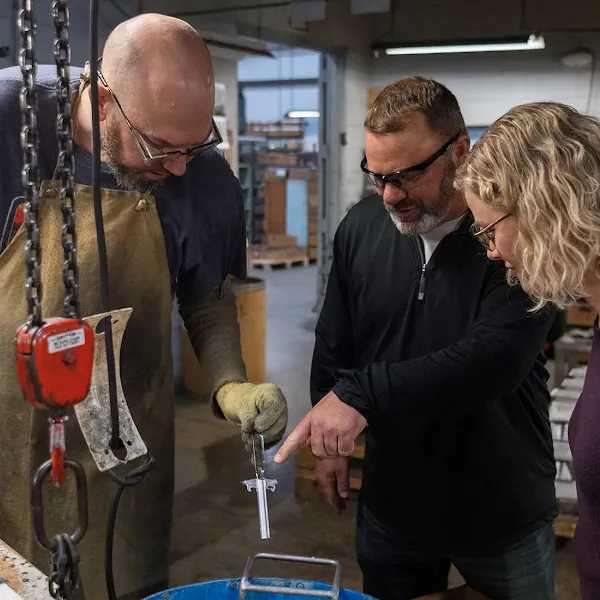
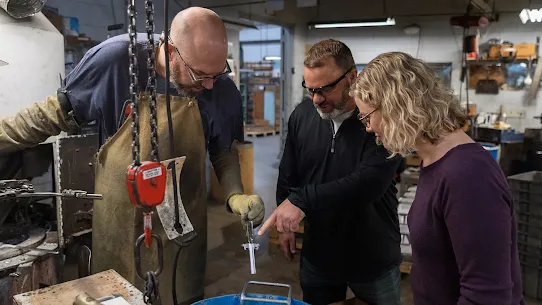
As WWII came to an end, an enterprising family in Iowa began to use the steel and aluminum no longer needed for the war effort to make aluminum-handled kitchen knives. Nearly 75 years later, Rada Cutlery is still family-owned and American-made–selling quality, affordable knives and kitchenware. But you won’t find Rada products in big-box stores. “Our products are primarily sold through thousands of school, church, and civic fundraising groups,” explains Dan Kielman, VP of Sales & Advertising. “Fundraising has been integral from the start,” adds Andrea Ramker, VP of Business Development, “but individuals soon discovered our products and began selling them at flea markets, fairs, and eventually online.” The company also sells to independent retailers and direct-to-consumer.
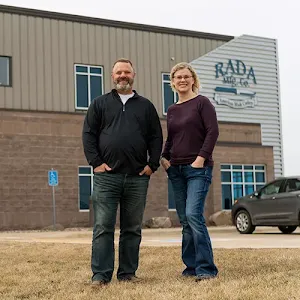
“We’re using a variety of strategies with Google Shopping to grow our business. Part of what makes Google Shopping work for us is that we have a recognizable brand name and reputation.”
The COVID-19 pandemic put many of these sales channels on hold as people avoided in-person encounters. Still, the company has achieved double-digit growth since the start of the pandemic by pivoting to online fundraising and sales with help from Google Shopping and Google Ads. “Part of what makes Google Shopping work for us is that we have a recognizable brand name and reputation,” says Dan. “Someone may search for a Rada paring knife, and they’ll see results for us from multiple sellers across the web.” Dan estimates that 15 percent of Rada sales now come from Google Ads or Google Search. As its online business grows, Rada Cutlery uses Google Workspace to share product imagery with its resale customers so they all have access to the best marketing resources. ”We're always providing new tools to help make their jobs as easy as possible,” says Andrea. “We'll be adding new products and amplifying our brand through our websites, social tools, and advertising as we continue to grow.” By keeping manufacturing in America and continuing to employ local Iowans, that growth stands to make quite an impact.
Products
Whitfield's Lawn & Garden
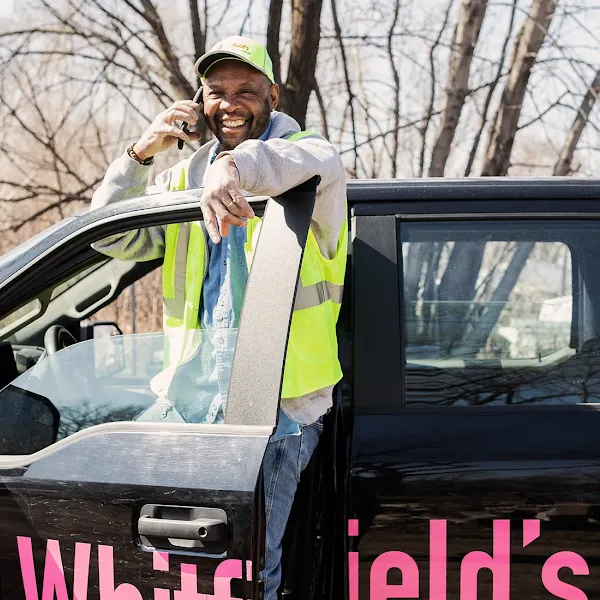
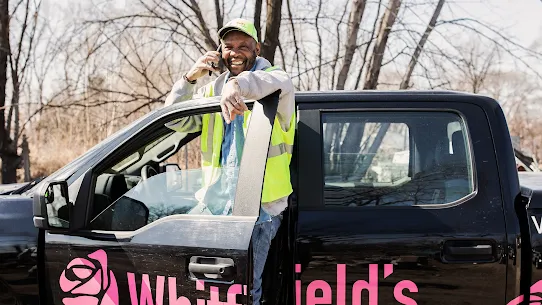
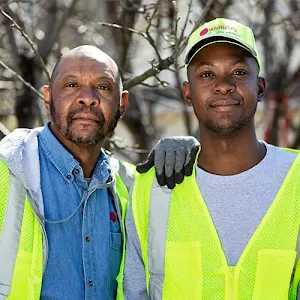
Randy Whitfield always had a passion for gardening, and in 2002 he finally turned his passion into his business. “Starting a business with my wife, Catherine, that supported four kids was a risk, but I live and breathe landscape, it’s a part of me,” he says. Randy went door to door with homemade business cards, and soon news about his green thumb and work ethic spread through Des Moines; Whitfield’s Lawn & Garden flourished. Randy began taking on larger contracts, and his family pitched in. “Around 2005, with help from my eldest child, Randy II, we hit a sweet spot. That’s when I knew we’d make it,” says Randy. In 2015, Randy’s son, Catum, joined the business after graduating from college and digitally transformed it. “I built a website, started using Google Ads and a Business Profile on Google, then got Dad off his flip phone and onto a smartphone,” says Catum. Since then, revenue has doubled, as has their staff. By 2019, Randy employed three generations of Whitfields.
“Google is everything: from Gmail as a first contact, to our Calendar keeping us organized, to our Drive for collaboration, and to Maps for finding our customers.”
When the pandemic hit, and Des Moines went inside and online, Whitfield’s Lawn & Garden became busier as those working from home noticed the states of their lawns. A Google search took them to Whitfield’s Lawn & Garden’s Business Profile on Google which featured rave customer reviews and Catum’s Google Ads also appeared in searches.“We had to keep hiring to keep up,” says RaeLynn, Randy’s daughter. Catum introduced Google Workspace, setting up Gmail, Calendar, Drive, and even Google Maps to keep employees and clients connected, organized, and safe. Revenue for 2020 is up 50 percent from 2019, and RaeLynn projects a similar increase for 2021. Randy intends to expand their snow-removal business using Google Ads, which already attracts 65 percent of their current clients. The phone rings off the hook, with 75 percent of their daily calls coming via Google. To keep up with demand, Catum plans to make the company’s office operations 100-percent digital in 2021. “We’re so grateful for the support and tools that Google has provided us,” he says.
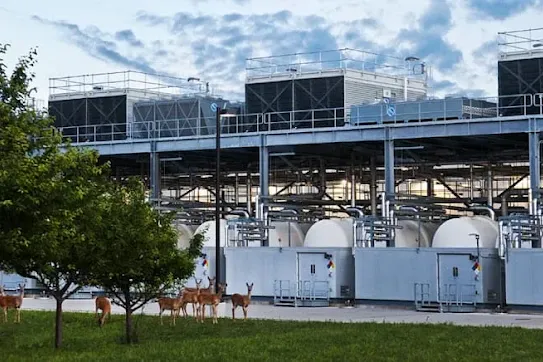
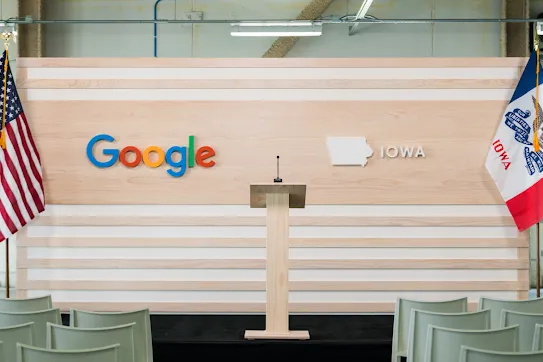
Council Bluffs
Data centers are what keep the internet up and running. Our Iowa data center employees work to keep Google Search, Gmail, YouTube, and many other Google applications operational, enabling Google to provide fast and reliable services around the clock to millions of people. Learn more about Google data centers.
1To provide a more complete picture of Google’s economic investment, the 2025 U.S. Economic Impact Report has updated its historical investment reporting methodology which previously focused primarily on physical data center construction. However, physical builds represent only the first component of our long-term commitment to our investments which also include applicable server and networking infrastructure capital expenditure. The current year methodology now includes our historical investment in data center construction, server and networking infrastructure.