-
$19.3B of economic activity
In 2025, Google helped provide $19.3 billion of economic activity for tens of thousands of Georgia businesses, nonprofits, publishers, creators, and developers
-
635,000 Georgia businesses
More than 635,000 Georgia businesses used Google’s tools at no cost to receive phone calls, bookings, reviews, requests for directions, or other direct connections to their customers
-
$3Binvestment in Georgia
Since the Douglas County, Georgia data center was built in 2003, Google has committed more than $3 billion of investment in the state1
Investment methodology now reflects total data center investment (construction, server and networking infrastructure). Learn more. -
$66M+ in philanthropic and social impact funding
Since 2005, Google and Googlers have given more than $66 million in funding (cash grants, social impact funding, employee donations, and gift match) to organizations and nonprofits in Georgia
-
46,000+ volunteer hours
Since 2010, through Google.org, Google employees volunteered more than 46,000 hours with nonprofits and schools
-
$16M+ of Ad Grants to nonprofits
In 2025 alone, Google.org provided more than $16 million worth of donated search ads to Georgia nonprofits through the Google Ad Grants program


$19.3B of economic activity
In 2025, Google helped provide $19.3 billion of economic activity for tens of thousands of Georgia businesses, nonprofits, publishers, creators, and developers
635,000 Georgia businesses
More than 635,000 Georgia businesses used Google’s tools at no cost to receive phone calls, bookings, reviews, requests for directions, or other direct connections to their customers
$3Binvestment in Georgia
Since the Douglas County, Georgia data center was built in 2003, Google has committed more than $3 billion of investment in the state1
Investment methodology now reflects total data center investment (construction, server and networking infrastructure). Learn more.
$66M+ in philanthropic and social impact funding
Since 2005, Google and Googlers have given more than $66 million in funding (cash grants, social impact funding, employee donations, and gift match) to organizations and nonprofits in Georgia
46,000+ volunteer hours
Since 2010, through Google.org, Google employees volunteered more than 46,000 hours with nonprofits and schools
$16M+ of Ad Grants to nonprofits
In 2025 alone, Google.org provided more than $16 million worth of donated search ads to Georgia nonprofits through the Google Ad Grants program
Featured businesses

Pollyanna Richter Weddings
Pollyanna Richter was enjoying her career as an accountant but missing an outlet for her creative side. “I was looking for more happy moments,” she says. Her wedding turned out to be an inspiration: She founded Pollyanna Richter Weddings in 2016, a luxury wedding planning and floral design boutique. Now she helps couples find their own happy moments with start-to-finish services, showstopping floral arrangements, and unique ceremonies in Atlanta’s most sought-after venues. She sources 80 percent of her flowers from Georgia farms, creating sustainable, eco-friendly designs. Pollyanna makes sure each couple she works with receives her full attention and each celebration is highly personalized and meticulously detailed. “I’m the yes person,” she says. “I say ‘We can do it,’ and then I make it happen.”

“Using Gemini for a small business basically means you can do more. You’re more profitable because you’re doing business smarter.”
To attract highly qualified leads, Pollyanna uses Google Ads, which drives 70 percent of website traffic. Insights from Google Analytics led her to shorten her contact form, increasing its use, and helped her find the ideal size for a pop-up window on her website. Pollyanna uses Gemini and Nano Banana when brainstorming floral arrangements and venue floor plans. They help her create exciting visual content to show clients so they can reach a faster decision and eliminate the need for expensive physical samples. She notes that the tools reduce planning time by about 50 percent per event. Gemini also helps her create proposals with an inviting tone, avoiding a “hard sell” approach. And since estimating costs for an event that’s 12–18 months in the future is challenging, Pollyanna inputs expenses like stem counts and labor into Gemini, which then generates reliable pricing margins. “Using Gemini for a small business basically means you can do more,” says Pollyanna. “You’re more profitable because you’re doing business smarter.”
Products
Multiscale Technologies
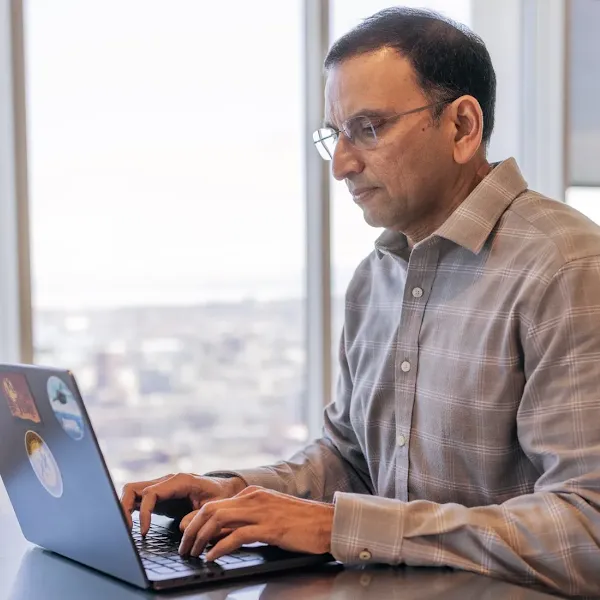
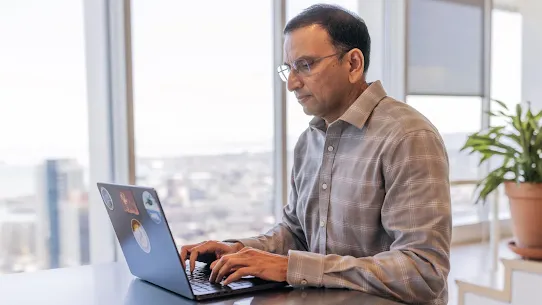
Vasu Kalidindi and Surya Kalidindi are the childhood friends behind Multiscale Technologies, a platform that uses cutting-edge AI to sharply reduce the number of physical experiments needed for business research and development and manufacturing. Multiscale was founded in 2020 after the two discussed the idea on a long walk; now Surya is the chief science officer and Vasu is the chief executive officer of their 50-employee company. Multiscale speeds development and cuts costs for their clients, who include manufacturers of everything from aluminum cans to french fries. There are also applications for the aerospace and defense industries, Vasu says. “Clients are looking for transformative solutions,” he adds. “It’s a privilege to be able to help them, and AI can help us do it a million times better.”
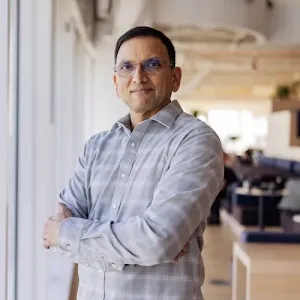
“Embrace AI early. It creates transformative advantages for business owners.”
Vasu says the Google Cloud platform is the backbone of the business. They use Google Kubernetes Engine to scale workloads, which vary widely between customers. “It saves months and years of work. When we use cloud services, we don’t have to reinvent the wheel,” he notes. The company’s AI experts use Gemini Notebook and Gemini to build the foundational layers for the Multiscale platform, passing the work on to solution engineers who then create workflows. Large language models (LLM) help the team glean insights from data. “LLMs can be the bridge between the best machine learning capabilities and human expertise,” Vasu says. Google for Startups AI Academy: American Infrastructure connected Multiscale with a vendor who helped them migrate their platform to make it more SaaS-enabled, which resulted in them being able to meet more milestones. Revenue grew more than 130 percent from 2023 to 2024, and they’re projecting a quadruple increase in 2025. Vasu’s advice for new business owners? "Embrace AI early,” he says. “It creates transformative advantages for business owners."
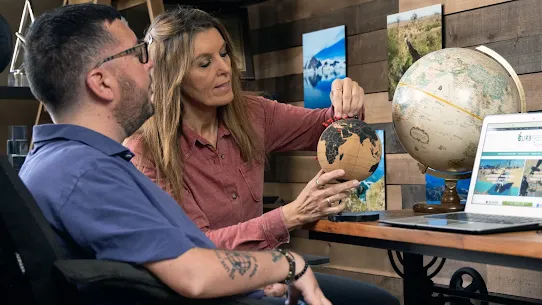
Curb Free with Cory Lee
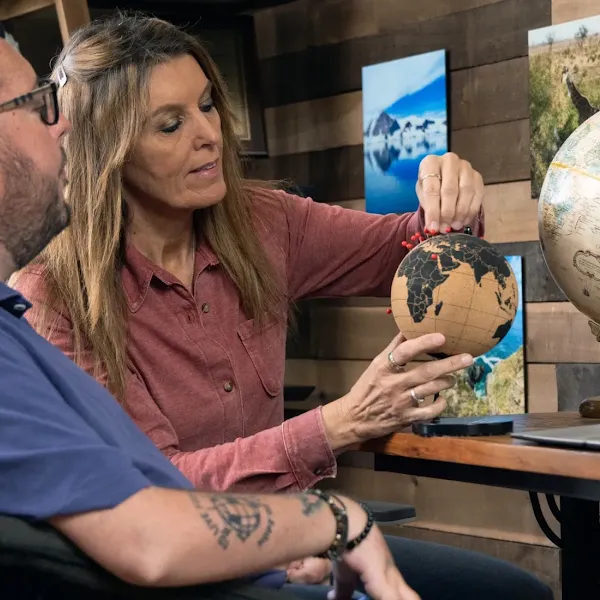
Cory Lee launched his travel blog, Curb Free with Cory Lee, just before graduating college in 2013. Cory uses a wheelchair but never let that stop him from seeing the world. He started his blog after finding few resources online for accessible travel, and has since amassed over 100,000 loyal followers and visited all seven continents. “It’s so rewarding for me to hear that someone could travel somewhere because of the information I provided–to know that I’m making a small difference in the disability space,” Cory says. The blog earns income through press trips, speaking engagements, and sponsored content. “Personalized ads are key to my website’s success, and they enable me to keep my content completely free,” he says. Plus, Cory and his mom (Curb Free’s first employee) wrote Let’s Explore with Cor Cor, a children’s book about a child who travels the world in his wheelchair.
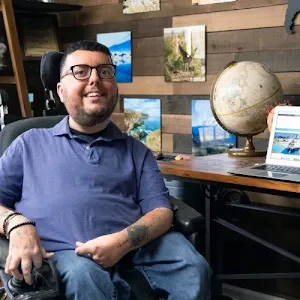
“Personalized ads are key to my website’s success, and they enable me to keep my content completely free.”
Cory has used Google tools from the start to connect with partner destinations, organize speaking engagements via Gmail and Google Meet, and upload content to Google Drive. “It makes it super easy for me to upload photos and videos and then send a link to the destination representative,” he says. Cory uses Google Analytics to understand content performance and what readers want, noting, “I know via Analytics that my audience loves any content I put out about accessible beaches.” He plans to start posting shorts this year to build his growing YouTube channel, and focus on his Curb Free Foundation, which has provided six travel grants to wheelchair users since launching in 2022. And he’s looking forward to organizing more group trips, which he’s done since 2018, starting with Greece this summer. “We learn so much from each other about what it's like to live and travel with a disability,” Cory says, “and sharing that experience with other wheelchair users is something that I don't get to do every day.”
Products
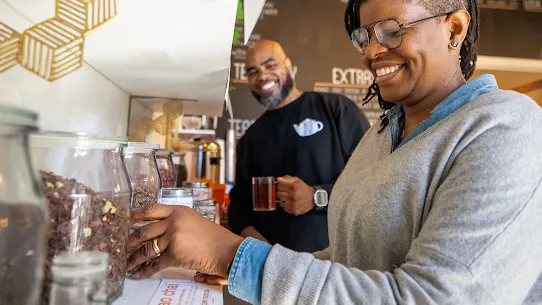
just add honey
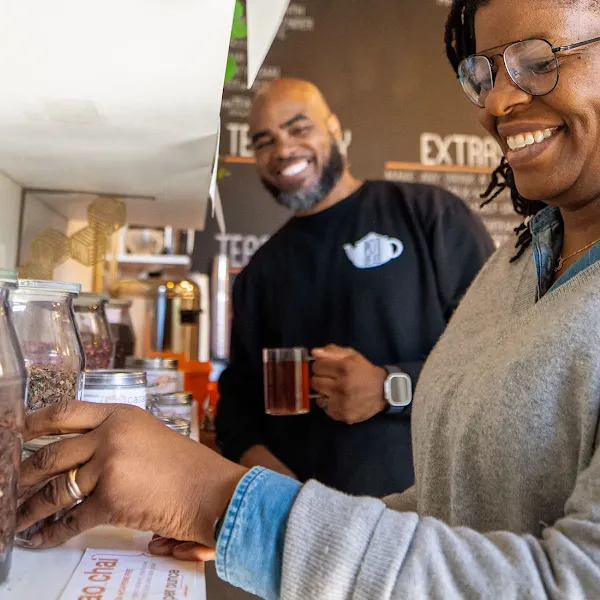
Tea is more than just a beverage for Brandi Shelton, CEO of just add honey tea company. “It’s about a slower pace and a quieter environment, and the conversations and friendships that develop over a cup of tea,” she says. Brandi founded just add honey in 2006, selling her tea blends at pop-ups and farmers markets before opening a store and cafe in 2014. Her husband, Jermail, is now the chief development officer. Tea lovers can buy leaves and accessories online–about 35 percent of their sales–or shop in person while visiting the cafe. Women-owned, Atlanta bakeries supply the pastries, including the matcha brownies or Earl Grey cookies made with Brandi’s blends. Tastings, tea parties, and classes make up a growing part of the business, and the company sells to over 50 wholesale partners. Their Google Business Profile helps bring customers in, Brandi says: “People come by or schedule events because they see the great reviews and pictures posted by other customers.”
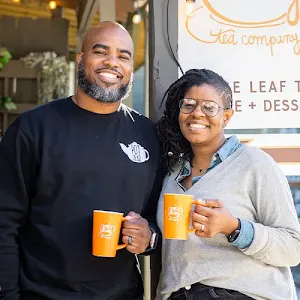
“People come by or schedule events because they see the great reviews and pictures posted on our Google Business Profile by other customers.”
Insights from Google Analytics help Jermail shape their marketing strategy. “We can attract the people looking for our product based on the data, and use our ad spend more wisely because we don’t have to throw out a wide net,” he says. Now they’re growing about 20 percent year-over-year and plan to add a larger event space and production facility to go with their shop on the BeltLine, a 22-mile trail that connects neighborhoods and parks near the heart of Atlanta. Yet each cup is still infused with the Shelton’s enthusiasm and passion. “It doesn’t feel like a job, it feels like an opportunity,” Brandi says. “We keep finding new ways to grow, and that’s exciting.” Adds Jermail, “We’ve built a community around our product. We’ve seen people meet, then catered their wedding. People from different backgrounds share a conversation over our tea. I really, really love the community aspect our business fosters.”
Products
Goodr
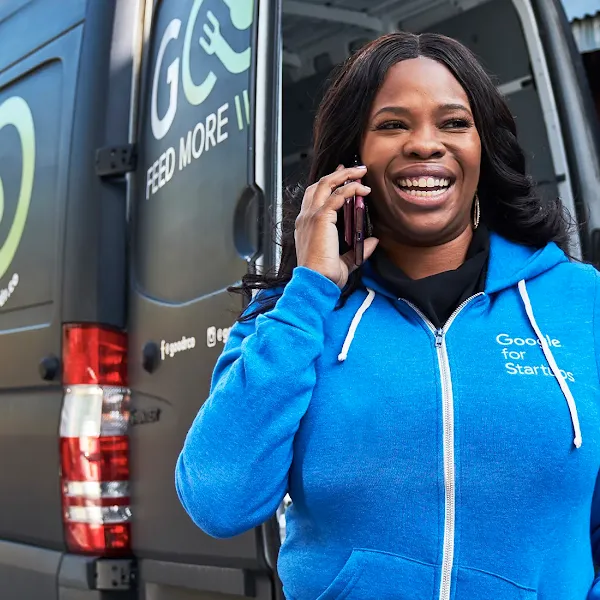
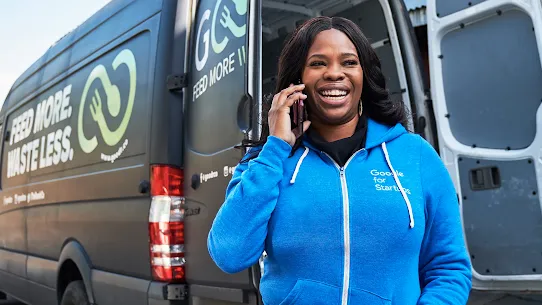
When Jasmine Crowe began providing home-cooked meals around Atlanta, the great need she saw made her angry. “There are 42 million food-insecure people in the U.S., and 72 billion pounds of food going into landfills every day. It makes no sense,” she says. Hunger, she realized, was a crisis of logistics, not scarcity. In 2017, she founded Goodr, a digitally-driven food management company that takes excess food from restaurants and businesses and delivers it to nonprofits or directly to those in need. Goodr has partnered with over 200 businesses to avoid wasting more than two million pounds of still-edible food. As CEO, Jasmine uses Google Analytics to track surplus food from pickup to donation. Her partners access the Goodr app on Google Play. And with Google Maps, Goodr optimizes delivery routes from restaurants and grocery stores to food banks.
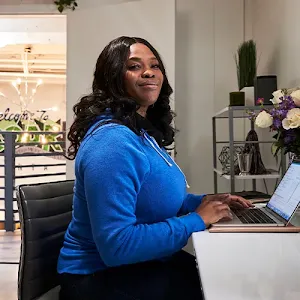
“Google products are easy to use…it’s so helpful to just look at a simple application like Google Analytics and say, ‘Okay, this is where the traffic is coming from.’”
When COVID-19 intensified the local hunger crisis, Jasmine contacted shuttered restaurants to collect food that would otherwise go to waste. Goodr also added a platform for those looking to donate groceries. “We were able to get that capability up and on our website in a matter of minutes,” Jasmine says, “and then we got the word out on social media.” Goodr has continued to provide a “triple-win solution”: People in need receive great meals, businesses can claim tax benefits for charitable giving, and less methane-producing food waste ends up in landfills. “We are a digital-first business,” Jasmine says, “and that has been what’s allowed us to continue helping others.” Goodr recently received a $100,000 non-dilutive investment from the Google for Startups Black Founders Fund as recognition of their great work. In 2021, as Goodr looks to expand into L.A., Chicago, and Miami, this capital and Google Ads will play a key role. “Google tools already play an important role in our business,” Jasmine notes, adding that in 2020 they began using Google Ads to help them spread the word about their important work.
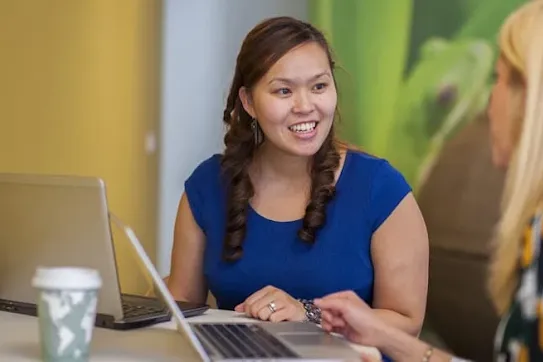
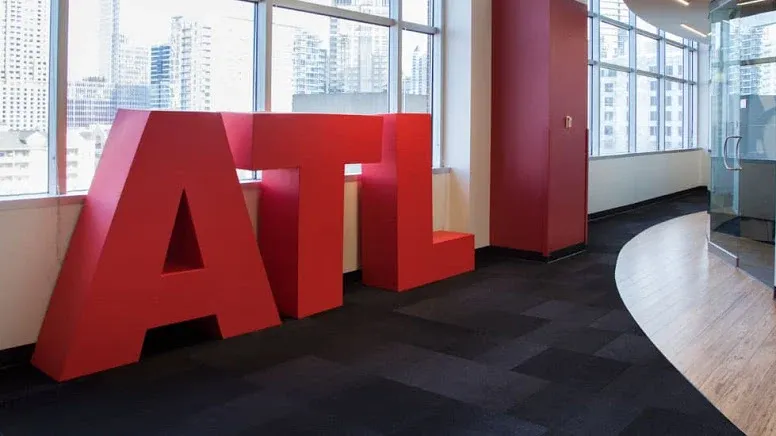
Atlanta
Our sales team supports a wide variety of businesses from retail to the travel industry. Google Atlanta also houses engineers who work on critical parts of our North American advertising business and on the infrastructure that makes Google fast and reliable for billions of people.
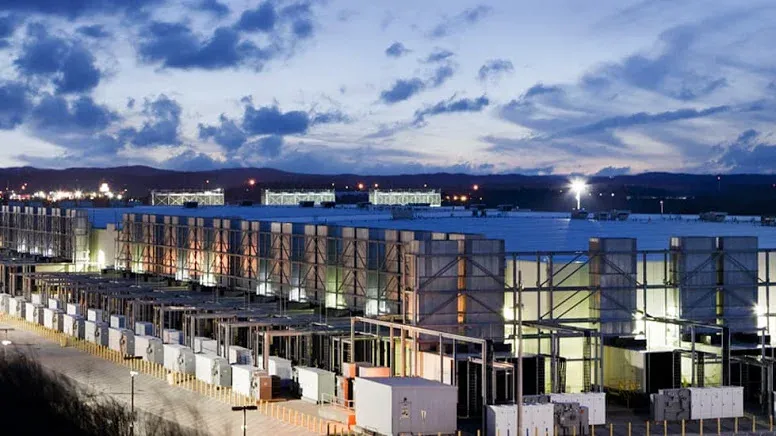
Douglas County
Data centers are what keep the internet up and running. Our employees at the Douglas County data center work to keep Google Search, Gmail, YouTube, and many other Google applications operational, enabling Google to provide fast and reliable services around the clock to millions of people. Learn more about Google data centers.
1To provide a more complete picture of Google’s economic investment, the 2025 U.S. Economic Impact Report has updated its historical investment reporting methodology which previously focused primarily on physical data center construction. However, physical builds represent only the first component of our long-term commitment to our investments which also include applicable server and networking infrastructure capital expenditure. The current year methodology now includes our historical investment in data center construction, server and networking infrastructure.